Dear Caregivers: Please Don’t Forget Yourself

Today’s a new day!

Dear Caregivers,

Please take care of yourself.

I know that may sound simple, but for caregivers, it can be one of the hardest things in the world to actually do.

You spend your days worrying about someone else.

Their medications.
Their appointments.
Their meals.
Their pain.
Their bad days.
Their good days.
Their needs.
Their fears.

You become the organizer, advocate, chauffeur, encourager, nurse, protector, prayer warrior, and sometimes the person holding everything together when it feels like everything is falling apart.

And somewhere along the way, you can disappear from your own list of priorities.

Please don’t.

My wonderful bride has been living the life of a caregiver for more than twenty years.

Twenty years.

She has walked beside me through illnesses, doctors, hospitals, treatments, setbacks, victories, fear, uncertainty, and more twists and turns than either of us ever imagined when we said, “I do.”

She is a rockstar.

But even rockstars need rest.

Even the strongest people need someone to lean on.

Even caregivers need caregivers.

And that’s why I want to say something directly to every person reading this who spends their life taking care of someone else:

You are not selfish for taking care of yourself.

You are not selfish for going to your own doctor’s appointments.

You are not selfish for meeting a friend for coffee.

You are not selfish for laughing.

You are not selfish for taking a walk.

You are not selfish for taking an afternoon or weekend off.

You are not selfish for asking someone else to step in.

You are not selfish for saying, “I need help.”

In fact, asking for help may be one of the most responsible things you can do.

Because you cannot pour from an empty cup forever.

I have heard the statistic that 64% of caregivers die before the person they are caring for. Whether that exact number applies universally or not, the warning behind it is very real: caregiving can take an enormous physical, emotional, and spiritual toll.

Did you catch that?

The person taking care of everyone else can become so exhausted that they forget they are a person who needs care, too.

So, dear caregiver, let me remind you of something:

Your life matters, too.

Your health matters.

Your mental and emotional well-being matters.

Your friendships matter.

Your dreams matter.

Your laughter matters.

Your time with God matters.

Your rest matters.

You matter.

Please don’t wait until your body forces you to stop.

Go to the doctor.

Take the medication you need.

Get some sleep.

Eat something.

Drink some water.

Call a friend.

Go outside.

Take a breath.

Pray.

Cry if you need to.

Laugh when you can.

And when someone says, “How can I help?”—please don’t automatically answer, “I’m fine.”

Maybe give them something they can actually do.

“Can you sit with them for a couple of hours?”

“Can you bring us dinner?”

“Can you drive us to this appointment?”

“Can you just come over and let me talk?”

Let people love you.

Because caregiving was never meant to be a one-person job.

My bride has taught me so much about love through the way she has cared for me for more than two decades. But I don’t want her—or any caregiver—to lose themselves while caring for someone they love.

You don’t have to destroy yourself to prove that you love someone.

Read that again.

You don’t have to destroy yourself to prove that you love someone.

Taking care of yourself doesn’t mean you love the person you’re caring for any less.

It means you’re giving yourself a better chance to keep walking beside them.

So, to every husband, wife, son, daughter, parent, sibling, friend, or stranger who has quietly become somebody’s caregiver:

I see you.

I appreciate you.

I honor you.

And I’m asking you—please take care of yourself.

Ask for help.

Accept help.

Make the doctor’s appointment.

Call your friends.

Take the day off when you can.

Sit somewhere quiet.

Take a deep breath.

And remember that you are more than the role you have been given.

You are a human being, not just a caregiver.

You deserve to live, too.

Because the goal isn’t simply to survive caregiving.

The goal is for both of you to keep living.

So, dear caregivers…

Please don’t forget yourself while you’re taking care of someone else.

You are needed.

You are loved.

You are valuable.

And yes—

you matter, too. ~OC

Racial Violence. Death. Hanging. Silence.

Tasia Fortune was found hanging.

I do not believe it was suicide.

But if you believe this was a suicide, then you should still demand that every question be answered. If there are circumstances that raise questions about whether her death was truly a suicide, then those questions deserve a real, independent investigation—not dismissal, not silence, and not another case quietly filed away.

Mississippi has a painful history of Black people dying under circumstances that have left families and communities demanding answers. For decades, deaths involving trees, ropes, and hanging have carried the horrifying shadow of America’s history of racial terror.

And now, in 2026, we are still having these conversations.

That should disturb every one of us.

Dear White Community: silence is not neutrality when people are demanding justice.

You don’t have to know every fact to demand that the facts be uncovered.

You don’t have to have all the answers to stand beside a grieving family.

And you don’t have to wait until something happens to someone you love before you decide that every human life deserves the same level of scrutiny, dignity, and protection.

Demand a real investigation.

Demand independent oversight.

Demand federal review when circumstances warrant it.

Demand transparency.

And demand that our laws be strong enough that justice is never dependent upon someone’s race, wealth, power, ZIP code, or political connections.

This isn’t about jumping to conclusions.

It’s about refusing to accept unanswered questions when a human being is dead.

It’s about refusing to let history repeat itself in silence.

It’s about making sure that when a Black person dies under suspicious or disputed circumstances, the response isn’t:

“Move along. Nothing to see here.”

No!

We have something to see.

We have questions to ask.

We have families to hear.

We have institutions to hold accountable.

And we have a moral obligation to insist that  every death deserves the truth.

Because justice delayed is painful.

Justice denied is devastating.

But justice ignored is a choice.

And silence is a choice, too.

Choose to speak.
Choose to ask questions.
Choose to demand the truth. ~OC

When We Care More About Position Than Protection

Today’s a new day!

I know many people may disagree with what I am about to say, and that’s okay. Healthy disagreement is part of life and part of the Church. But I stand firmly by these words.

I care far more about the victims of abuse in our churches than I do about whether a woman teaches a Bible study, preaches a sermon, or stands behind a pulpit in a Southern Baptist Church—or any other church.

For years, countless hours, meetings, conferences, articles, and social media debates have focused on the role of women in ministry. Entire denominations have wrestled with the question. Churches have split over it. Christians have passionately argued both sides.

Yet while some believers are consumed with debates about who is allowed to speak from the platform, children, teenagers, and vulnerable adults have suffered abuse in churches that were supposed to be safe places.

That should break our hearts.

When Jesus walked this earth, He consistently placed people above power, compassion above control, and protection of the vulnerable above religious posturing. He reserved some of His strongest words for religious leaders who burdened others while neglecting justice, mercy, and faithfulness.

I cannot help but wonder what Jesus thinks when churches spend more energy debating who can preach or teach than they spend ensuring children are protected.

I cannot help but wonder what He thinks when victims are ignored, silenced, questioned, or blamed while church leaders focus on preserving reputations and institutions.

The Church should be the safest place on earth for a child.

The safest place for a survivor.

The safest place for the wounded.

The safest place for those seeking healing.

And yet, too often, it has not been.

This is not a statement against theology. 

Theology matters. Scripture matters. Church governance matters. But if our theological discussions become more important than protecting people made in the image of God, something has gone terribly wrong.

If Christians are more concerned about a woman’s role in ministry than they are about children being abused, they have missed something essential in the teachings of Jesus.

If we can passionately argue about positions while remaining silent about victims, we need to examine our priorities.

If we are quicker to defend institutions than to defend the brokenhearted, we need to return to the heart of Christ.

Jesus welcomed children.

Jesus protected the vulnerable.

Jesus stood with the hurting.

Jesus confronted religious leaders who had lost sight of what mattered most.

The Church should do the same.

The world is watching how we respond. More importantly, survivors are watching.

They don’t need another debate.

They need safety.

They need accountability.

They need justice.

They need compassion.

They need to know that the Church values their well-being more than its reputation.

My prayer is that Christians of every denomination would become known not merely for what we believe, but for how fiercely we protect the vulnerable, how seriously we take abuse allegations, how compassionately we care for survivors, and how faithfully we reflect the heart of Jesus.

Because at the end of the day, protecting the vulnerable is not a political issue.

It is not a denominational issue.

It is not a conservative issue or a progressive issue.

It is a Jesus issue. ~OC

Human Trafficking: The Conversation We Cannot Afford To Avoid

Today’s a new day!

For almost twenty years, I have been involved in the fight against human trafficking. It has been one of the most rewarding and heartbreaking journeys of my life. I have seen lives restored, survivors find hope, and communities come together to protect the vulnerable. But I have also seen unimaginable pain, brokenness, and exploitation.

One thing that continues to break my heart is the response I sometimes receive when trying to discuss this horrific crime. More than once, I have heard people say, “I don’t want to hear about that.”

Every time I hear those words, a question immediately comes to mind: What if it were your child? What if it were your grandchild? What if it were your neighbor’s child? Would you still not want to hear about it?

The reality is that human trafficking thrives in darkness and silence. The traffickers count on people looking away. They count on communities being uncomfortable. They count on society deciding that the subject is too disturbing to discuss.

As followers of Jesus, we are called to do the opposite.

Jesus never ignored suffering. He never walked away from broken people because their situation was uncomfortable. He stepped into the pain. He confronted evil. He brought light into dark places. If we are going to follow His example, we cannot close our eyes to the suffering happening around us.

The truth is that every statistic represents a real person. Every number has a name. Every victim has a story. Every life being trafficked is a life created in the image of God. These are sons and daughters, brothers and sisters, friends and neighbors whose dreams are being stolen and whose dignity is being attacked.

Ending human trafficking will require more than awareness campaigns and social media posts. It will require courageous people willing to have difficult conversations. It will require churches willing to educate their congregations. It will require parents willing to talk to their children. It will require communities willing to recognize the warning signs and refuse to remain silent.

Yes, these conversations can be uncomfortable. Yes, they can be heartbreaking. But difficult conversations often lead to life-saving action.

Proverbs 31:8 tells us, “Speak up for those who cannot speak for themselves, for the rights of all who are destitute.”

That is not a suggestion. It is a calling.

We cannot protect what we refuse to discuss. We cannot fight what we refuse to acknowledge. We cannot rescue people if we choose comfort over compassion.

My prayer is that the Church would be known not for avoiding hard topics but for courageously confronting them with truth, love, and action. May we be people who refuse to look away. May we be people who speak up for the vulnerable. May we be people who shine the light of Christ into some of the darkest places in our world.

Because every statistic is a person.

Every person matters to God.

And that is reason enough to have the tough conversations.

This message is difficult, but it’s one that can help bring awareness, protection, and hope to those who need it most. ~OC

A Stand For Freedom

For twenty years, I have been on the front lines in the fight against human trafficking. It’s not a battle you walk away from unchanged. The stories, the faces, the weight of it all—they stay with you. There are moments, though, when I close my eyes and allow myself to imagine something different. A world where no one is bought or sold. A world where freedom isn’t a privilege, but a given. A world where the word “trafficking” is something future generations only read about in history books, unable to fully comprehend how it ever existed.

In that quiet place of imagination, there are no victims—only people living in dignity, walking in purpose, and free to live the lives they were created for. There are no broken families from exploitation, no silent cries in the dark, no chains—visible or invisible—holding people captive. It’s a world filled with justice, restoration, and hope.

But then I open my eyes.

And I am reminded that the world we live in is still deeply broken. Human trafficking remains one of the most horrific crimes against humanity—hidden in plain sight, thriving in darkness, and fueled by indifference, greed, and silence. It’s easy for people to look away, to believe it’s too big, too complicated, or too far removed from their everyday lives. But the truth is, it’s closer than we think—and it demands a response.

That’s why I don’t stay in that dream.

I wake up more determined.

Determined to be a voice for those who have been silenced. Determined to stand in the gap for those who feel forgotten. Determined to push back against the darkness, no matter how overwhelming it may seem. Because every life matters. Every story matters. And every effort—no matter how small—has the power to make a difference.

Over the years, I’ve learned that ending human trafficking isn’t about one person or one organization. It takes all of us. It takes awareness, education, and the willingness to have uncomfortable conversations. It takes communities choosing to care, to pay attention, and to act. It takes persistence—especially on the days when it feels like nothing is changing.

But change is happening slowly. 

Every life rescued is a victory. Every trafficker brought to justice is a step forward. Every person educated is another light shining into the darkness. Progress may not always be loud or immediate, but it is real—and it is worth fighting for.

So yes, I still close my eyes sometimes and imagine that world without human trafficking.

But I don’t stay there.

Because the real work is here, in the waking moments—in the conversations, the advocacy, the prayers, the actions. The dream isn’t meant to be an escape; it’s meant to be a vision. A reminder of what we’re fighting for.

And until that vision becomes reality, I will keep waking up determined.

Because giving up is not an option—and neither is ignoring the call to stand for freedom. ~OC

End Modern-Day Slavery

Today’s a new day! Freedom is something we all want and everyone deserves. No one would prefer not to be free. Yet, there are an estimated 40 million slaves in the world today. This brutal criminal enterprise generates an estimated $150 billion annually. Every minute of every day, people are being sold into slavery — and it is possible to stop this crime against humanity. I know it’s possible to stop slavery and trafficking in our lifetime, but the anti-trafficking movement needs more people to join the fight. Will you join the fight to end human trafficking? Someone’s life is depending on it. ~OC

Modern-Day Abolitionist

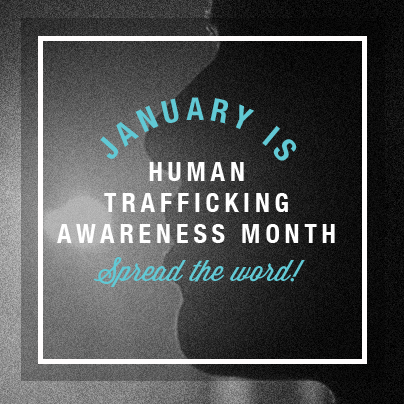
January has been designated as Human Trafficking Awareness Month. But for me, human trafficking is a daily fight. In 2007, I became aware of this horrible crime. Since that day, I have dedicated my life to helping end modern day slavery. As we start a new year, I encourage everyone to become more educated on the crime of human trafficking. I believe by working together, we can end this crime that effects over 40 Million People. Will you join me in this fight? ~OC

Blog at WordPress.com.

Up ↑