Two Questions Every Christian Should Ask Themselves

Today’s a new day! 

There are two questions that have been on my heart recently, and honestly, they are questions I need to ask myself as much as anyone else.

Question #1: When someone looks at your life, would they want to be like you?

Not because we’re perfect.

Not because we have all the answers.

Not because we’ve never failed.

But when people see our lives, do they see something different? Do they see the peace of Christ in the middle of chaos? Do they see grace when others are harsh? Do they see hope when circumstances seem hopeless? Do they see a faith that remains steady when life gets difficult?

The Apostle Paul boldly wrote, “Follow my example, as I follow the example of Christ” (1 Corinthians 11:1).

That is a challenging statement. Could we honestly say the same?

When people watch how we treat our spouses, our children, our neighbors, the cashier at the grocery store, or even those who disagree with us, are they seeing Jesus reflected in us?

The truth is that our lives may be the only Bible some people ever encounter. Every conversation, every action, every response to adversity is an opportunity to point people toward Christ—or away from Him.

None of us get it right all the time. I certainly don’t. But our goal should be to live in such a way that others are drawn not to us, but to the Savior living within us.

Question #2: Do you have a passion to praise and serve Jesus?

Christianity was never meant to be a once-a-week activity.

It was never meant to be a religious checkbox.

It was never meant to be a routine without relationship.

Jesus gave everything for us. He carried our sins to the Cross, conquered death through His resurrection, and offers us eternal life. How can we not respond with passionate praise and wholehearted service?

Praise isn’t just singing songs on Sunday morning. Praise is thanking God when life is good. Praise is trusting Him when life is hard. Praise is lifting His name when the diagnosis comes, when the bills pile up, when the storm refuses to leave.

Service isn’t just what happens inside church walls. Service happens when we encourage someone who is hurting. It happens when we pray for others. It happens when we meet needs, show compassion, and become the hands and feet of Jesus in a broken world.

The question isn’t whether we attend church.

The question is whether our hearts burn with a love for Jesus.

Do we wake up looking for opportunities to honor Him?

Do we seek ways to serve others in His name?

Do we long to know Him more deeply today than we did yesterday?

A Personal Reflection:

As I ask these questions of my fellow brothers and sisters in Christ, I must also ask them of myself.

When people look at my life, do they see Jesus?

Am I living in a way that inspires others to draw closer to Him?

Do I still have a passion to praise Him through every season?

Do I still have a desire to serve Him with whatever time, talents, and opportunities He has given me?

These aren’t questions meant to bring condemnation. They are questions meant to bring reflection and renewal.

Perhaps today is a good day for all of us to pause and ask God to search our hearts.

May our lives be a testimony of His goodness.

May our words point people toward His truth.

May our actions reflect His love.

And may we never lose our passion to praise and serve the One who gave everything for us.

Lord, let my life be a reflection of You. Help me live in such a way that others see Jesus in me. Rekindle my passion to praise You, serve You, and follow You faithfully every day. Amen. ~OC

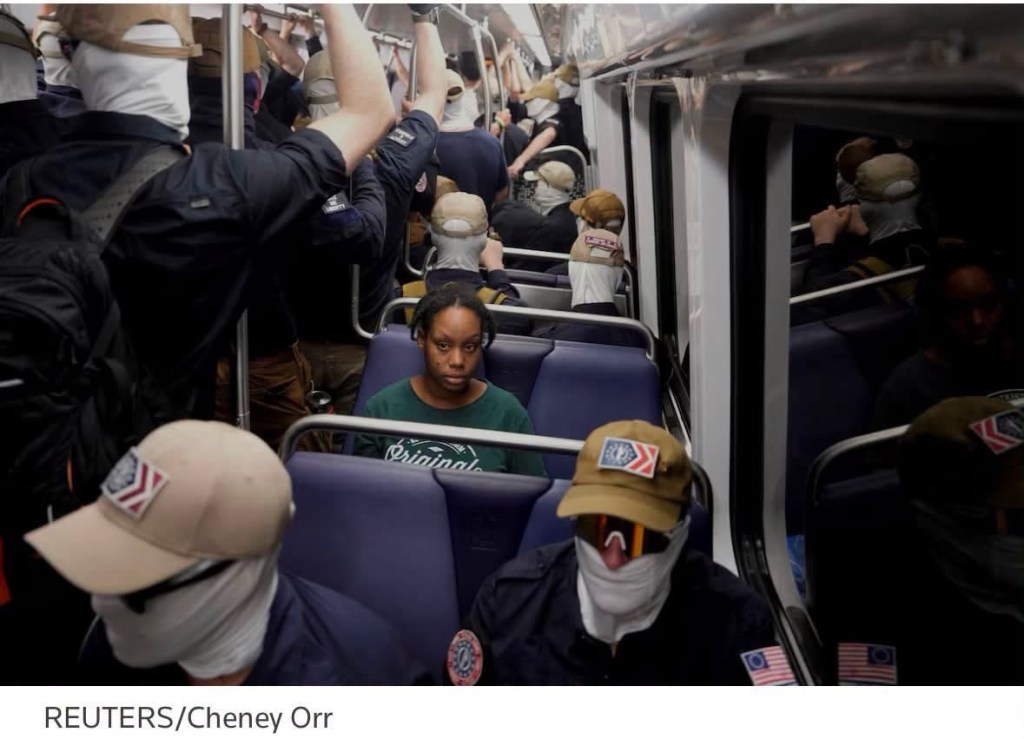
America Needs A Better Gospel Than Christian Nationalism

Today’s a new day!

In recent years, many Christians have wrestled with an important question: What happens when faith becomes too closely tied to politics?

As followers of Jesus, we should love our country, pray for our leaders, and seek the good of our communities. Scripture encourages us to be engaged citizens and to pursue justice, mercy, and righteousness. But there is a difference between loving our nation and confusing our nation with the Kingdom of God.

America needs a better gospel than Christian Nationalism.

The Gospel of Jesus Christ was never about elevating one nation above all others. It was never about political power, cultural dominance, or winning elections. The Gospel is the good news that Jesus Christ came to save sinners, reconcile humanity to God, and establish a Kingdom that transcends every border, language, ethnicity, and political system.

Jesus was not crucified because He sought political office. He was crucified because He proclaimed a Kingdom that challenged the powers of this world. His message was not “Take control.” His message was “Follow Me.”

Throughout Scripture, we see that God’s love extends to all people. From Genesis to Revelation, God’s redemptive plan includes every tribe, every tongue, and every nation. The Church is not called to represent one earthly kingdom. The Church is called to represent Christ.

When Christians place their ultimate hope in political movements, parties, or national identity, they risk exchanging the Gospel for something far smaller. Political victories may come and go. Nations rise and fall. But the Kingdom of God endures forever.

Christian Nationalism often asks, “How can we make America Christian again?” The Gospel asks a different question: “How can we help people know and follow Jesus?”

One focuses on power. The other focuses on transformation.

One seeks cultural control. The other seeks changed hearts.

One can create insiders and outsiders. The Gospel invites everyone to the foot of the Cross.

The Church’s mission has never been to conquer a nation. It has always been to make disciples. Our calling is to love our neighbors, care for the poor, defend the vulnerable, welcome the stranger, forgive our enemies, and proclaim the saving grace of Jesus Christ.

America does not need a gospel wrapped in a flag.

America needs the Gospel of Jesus.

The Gospel that calls us to humility rather than pride.

The Gospel that teaches us to love rather than hate.

The Gospel that values truth over tribalism.

The Gospel that reminds us our citizenship is ultimately in Heaven.

The Church is at its best when it looks less like a political movement and more like Jesus. The world does not need Christians who merely win arguments. It needs Christians who reflect the character of Christ.

May we never trade the Cross for political influence.

May we never confuse patriotism with discipleship.

And may we remember that our greatest hope has never been found in a nation, a party, or a politician.

Our hope is found in Jesus Christ alone. ~OC

SURRENDER

Here is a acronym I created for the word S.U.R.R.E.N.D.E.R.

S – Seek God first in all things
U – Understand that His ways are higher than ours
R – Rest in His promises during every season
R – Rely on His strength instead of your own
E – Embrace His grace and mercy each day
N – Nurture your faith through prayer and Scripture
D – Deny yourself and take up your cross daily
E – Encourage others with the love of Christ
R – Remain faithful until the end

Faith Journey Reflection:

SURRENDER is not giving up—it is giving everything over to God. It is seeking Him, trusting Him, relying on His strength, and remaining faithful as He leads us step by step on our journey of faith.

“Trust in the Lord with all your heart, and do not lean on your own understanding. In all your ways acknowledge him, and he will make straight your paths.” ~ Proverbs 3:5-6 

When The White House Chooses The Main Event

On Sunday night, the White House lawn will host a UFC event as part of America’s 250th Birthday Celebration. 

For some, it will be entertainment.

For others, it will be a symbol of strength, toughness, and American culture.

For me, it represents something entirely different.

The White House has long been called “The People’s House.” Throughout American history, its grounds have hosted events that brought families together, celebrated achievement, honored service, and showcased the best of our nation.

The annual Easter Egg Roll has welcomed children and families to the South Lawn since  1878 under President Rutherford B. Hayes.

Presidents have hosted Independence Day celebrations filled with music, fireworks, and community.

President Lyndon Johnson transformed the lawn into an outdoor arts venue during the Festival of the Arts.

President Gerald Ford hosted Queen Elizabeth  for an elegant state dinner beneath a tent on the South Lawn.

The grounds have welcomed world leaders, served as the landing place for Marine One, and stood as a symbol of American leadership.

President Jimmy Carter even installed a temporary ice rink so Olympic champion Peggy Fleming could perform for guests.

President George W. Bush hosted T-ball games featuring children of active-duty military personnel.

Families.

Children.

Artists.

Athletes.

Public servants.

Moments that reflected dignity and community.

Now, the White House lawn welcomes the UFC.

That reality should cause us to ask an important question:

What are we choosing to celebrate?

The UFC has certainly become a massive business success. Millions watch its events. Millions more wager on the outcomes. The organization has produced many talented athletes who have worked hard to reach the highest levels of their sport.

But the UFC has also been surrounded by years of controversy involving domestic violence allegations, arrests, abuse accusations, and troubling behavior from some of its biggest stars.

The organization’s founder and CEO was caught on video striking his wife. Public outrage followed. Yet many quickly moved on.

Several fighters over the years have faced allegations or arrests involving domestic violence and abuse.

Yet tonight, this organization is being elevated to center stage on one of the most recognizable pieces of property in America.

As Christians, we should not merely ask whether something is popular.

We should ask whether it is worthy of celebration.

Popularity and righteousness are not the same thing.

The crowds that shouted “Hosanna” on Sunday shouted “Crucify Him” on Friday.

The Bible repeatedly reminds us that the values of God’s Kingdom often stand in direct opposition to the values of the world.

Jesus taught us to honor the peacemakers.

Jesus taught us to protect the vulnerable.

Jesus taught us that true greatness is found in humility and service.

Jesus never taught us to idolize aggression, celebrity, power, or wealth.

I already know many people will disagree with me.

Many will watch.

Many will cheer.

Many will place bets.

Many will celebrate the spectacle.

That is their choice.

But as for me, I cannot help but feel sadness that a place which has hosted children hunting Easter eggs, military families playing T-ball, artists sharing their gifts, and leaders gathering in diplomacy is now being used to showcase an organization whose history includes so many troubling examples of violence beyond the octagon.

Perhaps that says something about where our culture is today.

Perhaps it says something about what we reward.

Perhaps it says something about what we have become willing to overlook.

As Christians, our calling is not to blindly follow the crowd or celebrate whatever is trending.

Our calling is to seek God’s Kingdom first.

To honor what is good.

To defend what is right.

To stand for truth even when it is unpopular.

America’s 250th birthday should be an 

opportunity to celebrate the highest ideals of our nation: faith, family, service, sacrifice, character, and human dignity.

Instead, Sunday’s main event leaves me asking whether we have confused entertainment with virtue.

And that is a fight I have no interest in watching. ~OC

Hope Isles: A New Beginning Chapter 2-The First Open Door

The next morning, Hope Isles woke to the scent of fresh rain and the sound of seagulls circling above the harbor.

As usual, James was already awake.

He sat on the front porch of the Wilson house with a Bible, a notebook, and a cup of coffee.

The old porch swing creaked gently as he read.

Seven bedrooms.

Seven empty rooms.

Most people saw an oversized house.

James saw possibility.

He closed his Bible and looked at the handwritten note in his notebook.

“Lord, show me how this house can serve You.”

Just then, a pickup truck pulled into the driveway.

James stood.

Pastor Timothy climbed out.

“Hope I’m not too early.”

James smiled.

“I’ve been up for hours.”

The pastor looked around the property.

“You’ve done a lot of work already.”

Several flowerbeds had been cleared. The grass was freshly cut. The front porch had been cleaned.

“There is still plenty to do,” James replied.

Pastor Timothy glanced toward the large house.

“I have to admit, I’m curious.”

“So is the rest of the town.”

They both laughed.

Pastor Timothy grew serious.

“Yesterday you mentioned God having a purpose for every room.”

James nodded.

“I did.”

“Would you care to explain?”

James opened the front door.

“Come inside.”

The two men walked through the house.

Dust still lingered in some corners.

Boxes remained unpacked.

Yet there was a warmth to the place.

A sense that life was returning.

James led Pastor Timothy upstairs.

“This room,” he said, opening the first door, “will be a guest room.”

The pastor nodded.

“And this one?”

“A study.”

The next room.

“A prayer room.”

Another.

“A place for Bible studies.”

Pastor Timothy raised an eyebrow.

“You’ve thought about this.”

“For a long time.”

They continued down the hallway.

Finally, they entered the largest bedroom.

James stood silently for a moment.

Then he spoke.

“I don’t think God gave me this house just for me.”

“What do you mean?”

James looked out the window toward town.

“I think there are people who need a place to stay. A place to heal. A place to start over.”

The pastor didn’t answer immediately.

Instead, he folded his arms and considered the young man’s words.

After a moment he said,

“That’s a big vision.”

“So is God.”

Pastor Timothy smiled.

“Fair point.”

Later that afternoon, James rode his bicycle into town.

As expected, his first stop was the Sit Awhile Diner.

The bell jingled.

June looked up.

“Well, if it isn’t the bicycle guy.”

“I’m beginning to think that nickname is permanent.”

“It probably is.”

James laughed and took his usual booth.

June brought him sweet tea.

“Something interesting happened this morning.”

“Oh?”

“Mrs. Evelyn has been talking about you.”

James recognized the elderly woman whose breakfast he had paid for.

“Hopefully that’s a good thing.”

June grinned.

“In this town, any talking is good talking.”

Before James could respond, the diner door opened.

Joe the mailman stepped inside.

He looked troubled.

That immediately caught June’s attention.

Joe was usually cheerful.

“Everything okay?” she asked.

Joe sighed.

“My truck broke down again.”

June chuckled.

“That truck is older than half the town.”

“Still runs better than some people.”

James stood.

“Need help?”

Joe looked surprised.

“You know anything about engines?”

“A little.”

Joe shrugged.

“Can’t make it worse.”

“Let’s not test that theory.”

An hour later, James and Joe stood beside the mail truck behind the post office.

The hood was open.

Joe watched as James checked several connections.

“You’ve done this before.”

“More than once.”

A few minutes later, the engine roared to life.

Joe’s eyes widened.

“Well, I’ll be.”

James closed the hood.

“There you go.”

Joe stared.

“How much do I owe you?”

“Nothing.”

“Nothing?”

“Just helping a neighbor.”

Joe shook his head.

“You’re making the rest of us look bad.”

James laughed.

“I doubt that.”

That evening, as the sun began to set, James rode home.

When he reached Joy Lane, something unexpected caught his attention.

A young woman sat on the curb across from the Wilson house.

She looked tired.

Worried.

And completely out of place.

James parked his bicycle.

“Hello.”

The woman looked up quickly.

“Sorry,” she said. “I wasn’t trespassing.”

“I wasn’t accusing you.”

She hesitated.

Then asked,

“Are you James?”

“Yes.”

Her eyes filled with relief.

“Pastor Timothy said I might find you here.”

James sat down on the curb a few feet away.

“What can I do for you?”

The young woman looked down at the suitcase beside her.

For a moment she seemed unsure whether to speak.

Finally she whispered,

“I need a place to stay.”

James glanced toward the large house behind him.

Seven bedrooms.

Seven empty rooms.

And suddenly, one of them no longer seemed empty.

The prayer he had prayed that morning echoed in his heart.

“Lord, show me how this house can serve You.”

Perhaps the answer had just arrived carrying a suitcase.

To Be Continued

When We Care More About Position Than Protection

Today’s a new day!

I know many people may disagree with what I am about to say, and that’s okay. Healthy disagreement is part of life and part of the Church. But I stand firmly by these words.

I care far more about the victims of abuse in our churches than I do about whether a woman teaches a Bible study, preaches a sermon, or stands behind a pulpit in a Southern Baptist Church—or any other church.

For years, countless hours, meetings, conferences, articles, and social media debates have focused on the role of women in ministry. Entire denominations have wrestled with the question. Churches have split over it. Christians have passionately argued both sides.

Yet while some believers are consumed with debates about who is allowed to speak from the platform, children, teenagers, and vulnerable adults have suffered abuse in churches that were supposed to be safe places.

That should break our hearts.

When Jesus walked this earth, He consistently placed people above power, compassion above control, and protection of the vulnerable above religious posturing. He reserved some of His strongest words for religious leaders who burdened others while neglecting justice, mercy, and faithfulness.

I cannot help but wonder what Jesus thinks when churches spend more energy debating who can preach or teach than they spend ensuring children are protected.

I cannot help but wonder what He thinks when victims are ignored, silenced, questioned, or blamed while church leaders focus on preserving reputations and institutions.

The Church should be the safest place on earth for a child.

The safest place for a survivor.

The safest place for the wounded.

The safest place for those seeking healing.

And yet, too often, it has not been.

This is not a statement against theology. 

Theology matters. Scripture matters. Church governance matters. But if our theological discussions become more important than protecting people made in the image of God, something has gone terribly wrong.

If Christians are more concerned about a woman’s role in ministry than they are about children being abused, they have missed something essential in the teachings of Jesus.

If we can passionately argue about positions while remaining silent about victims, we need to examine our priorities.

If we are quicker to defend institutions than to defend the brokenhearted, we need to return to the heart of Christ.

Jesus welcomed children.

Jesus protected the vulnerable.

Jesus stood with the hurting.

Jesus confronted religious leaders who had lost sight of what mattered most.

The Church should do the same.

The world is watching how we respond. More importantly, survivors are watching.

They don’t need another debate.

They need safety.

They need accountability.

They need justice.

They need compassion.

They need to know that the Church values their well-being more than its reputation.

My prayer is that Christians of every denomination would become known not merely for what we believe, but for how fiercely we protect the vulnerable, how seriously we take abuse allegations, how compassionately we care for survivors, and how faithfully we reflect the heart of Jesus.

Because at the end of the day, protecting the vulnerable is not a political issue.

It is not a denominational issue.

It is not a conservative issue or a progressive issue.

It is a Jesus issue. ~OC

A Free Press Matters

Today’s a new day!

When I was in high school, I had a dream. I wanted to be the next great sports journalist. I loved sports, but even more than the games themselves, I loved the stories behind them. I admired the journalists who traveled the country, asked tough questions, told inspiring stories, and brought fans closer to the athletes and teams they followed.

Journalism fascinated me because it was about more than reporting scores and statistics. It was about seeking the truth, telling the stories that needed to be told, and helping people stay informed.

That is why I find myself disappointed by the growing attacks on journalists that we see today.

No, journalists are not perfect. They are human beings, and like every profession, there are good ones and bad ones. Some make mistakes. Some have biases. But the answer to imperfect journalism is not to destroy journalism. The answer is to pursue better journalism.

Throughout history, journalists have played a critical role in holding powerful people accountable. They have uncovered corruption, exposed injustice, highlighted the struggles of ordinary people, and brought important issues into the public conversation. Many have risked their careers, their freedom, and even their lives to report the truth.

A healthy democracy depends on an informed citizenry. People cannot make wise decisions if they do not have access to information. They cannot hold leaders accountable if no one is asking questions. They cannot understand what is happening in their communities, their nation, or the world if there is no one reporting the facts.

That is why a free press is so important.

We may not always agree with what journalists write. We may disagree with their conclusions, perspectives, or reporting. But disagreement should never become hostility toward the very institution that helps keep citizens informed.

As Christians, we should be people who value truth. Scripture repeatedly calls us to walk in truth, speak truth, and seek truth. While journalists are not the source of truth itself, many faithfully work to uncover facts and bring important information into the light.

When I think back to my high school dream of becoming a sports journalist, I still have great respect for those who dedicate their lives to telling stories and informing the public. Their work matters.

A democracy without journalists is a democracy left in the dark.

We may not always like what we hear, but a society that values truth must also value those who seek to report it.

Let us encourage honesty, integrity, and accountability in journalism while recognizing the vital role a free press plays in preserving freedom. An informed people are better equipped to make wise decisions, engage in meaningful conversations, and help build a stronger future for the next generation. ~OC

Human Trafficking: The Conversation We Cannot Afford To Avoid

Today’s a new day!

For almost twenty years, I have been involved in the fight against human trafficking. It has been one of the most rewarding and heartbreaking journeys of my life. I have seen lives restored, survivors find hope, and communities come together to protect the vulnerable. But I have also seen unimaginable pain, brokenness, and exploitation.

One thing that continues to break my heart is the response I sometimes receive when trying to discuss this horrific crime. More than once, I have heard people say, “I don’t want to hear about that.”

Every time I hear those words, a question immediately comes to mind: What if it were your child? What if it were your grandchild? What if it were your neighbor’s child? Would you still not want to hear about it?

The reality is that human trafficking thrives in darkness and silence. The traffickers count on people looking away. They count on communities being uncomfortable. They count on society deciding that the subject is too disturbing to discuss.

As followers of Jesus, we are called to do the opposite.

Jesus never ignored suffering. He never walked away from broken people because their situation was uncomfortable. He stepped into the pain. He confronted evil. He brought light into dark places. If we are going to follow His example, we cannot close our eyes to the suffering happening around us.

The truth is that every statistic represents a real person. Every number has a name. Every victim has a story. Every life being trafficked is a life created in the image of God. These are sons and daughters, brothers and sisters, friends and neighbors whose dreams are being stolen and whose dignity is being attacked.

Ending human trafficking will require more than awareness campaigns and social media posts. It will require courageous people willing to have difficult conversations. It will require churches willing to educate their congregations. It will require parents willing to talk to their children. It will require communities willing to recognize the warning signs and refuse to remain silent.

Yes, these conversations can be uncomfortable. Yes, they can be heartbreaking. But difficult conversations often lead to life-saving action.

Proverbs 31:8 tells us, “Speak up for those who cannot speak for themselves, for the rights of all who are destitute.”

That is not a suggestion. It is a calling.

We cannot protect what we refuse to discuss. We cannot fight what we refuse to acknowledge. We cannot rescue people if we choose comfort over compassion.

My prayer is that the Church would be known not for avoiding hard topics but for courageously confronting them with truth, love, and action. May we be people who refuse to look away. May we be people who speak up for the vulnerable. May we be people who shine the light of Christ into some of the darkest places in our world.

Because every statistic is a person.

Every person matters to God.

And that is reason enough to have the tough conversations.

This message is difficult, but it’s one that can help bring awareness, protection, and hope to those who need it most. ~OC

Living Out Your Faith At Work

As we start a new week, I wanted to share something that is on my heart: living out your faith at your job.

For many believers, it is easy to think of faith as something that only happens on Sunday mornings. We worship, pray, read our Bibles, and fellowship with other believers. Yet God never intended our faith to be limited to a church building. Our faith is meant to be lived out everywhere we go, including our workplace.

Whether you work in an office, a school, a hospital, a construction site, a retail store, or from your home, your job is a mission field. Every day, God places people in your path who may never step foot inside a church but who can witness the love of Christ through your life.

Living out your faith at work does not always mean preaching a sermon to your coworkers. Sometimes it means showing integrity when no one is watching. It means treating others with kindness when they are difficult to love. It means refusing to participate in gossip, dishonesty, or negativity. It means being dependable, trustworthy, and giving your best effort because you are ultimately working for the Lord.

The Apostle Paul reminds us in Colossians 3:23, “Whatever you do, work heartily, as for the Lord and not for men.” What a powerful perspective! Our work becomes an act of worship when we do it with excellence and gratitude unto God.

There will be days when your patience is tested. There will be moments when coworkers, customers, or supervisors challenge you. In those moments, your response may speak louder than any words you could ever say. The peace you display in the middle of pressure, the grace you extend when others are harsh, and the hope you carry during difficult times can point people directly to Jesus.

Remember, you may be the only Bible some people ever read. Your attitude, your character, and your actions can open doors for conversations about faith that would otherwise never happen.

As this new week begins, ask the Lord to help you shine His light wherever He has planted you. Pray for your coworkers. Pray for your supervisors. Pray for those you serve. Ask God to give you opportunities to encourage someone, to speak life into someone who is struggling, and to represent Christ well in everything you do.

You do not have to stand behind a pulpit to make an eternal impact. God can use your desk, your work truck, your classroom, your job site, or your office as a platform for His glory.

This week, go to work with purpose. Walk in integrity. Serve with excellence. Love people well. And let the light of Jesus shine through you so brightly that others are drawn to Him.

May this be a week where your faith is not just something you believe, but something you boldly and lovingly live out every day.

Be blessed, and have an incredible week serving Jesus wherever He has placed you. ~OC

The Book Of Jude And Today’s Political Climate

Today’s a new day! 

As I have been studying the Book of Jude, here are some of my thoughts:

The Book of Jude may be one of the shortest books in the Bible, but its message feels remarkably relevant in today’s political climate. Written as a warning to believers, Jude addressed a culture filled with deception, division, and individuals who sought power for their own gain. While Jude was not writing about modern politics, many of the principles he shared can help us navigate the world we live in today.

A Warning About Deception

Jude urged believers to “contend for the faith” because certain individuals had slipped into positions of influence and were leading people away from truth. Today, we live in a world overflowing with information, opinions, and competing narratives. Politicians, media outlets, influencers, and commentators all seek to shape public opinion.

The challenge for Christians is not to blindly follow a political party, personality, or movement. Our ultimate allegiance belongs to Jesus Christ. Jude reminds us that truth matters and that believers must exercise discernment rather than simply accepting whatever aligns with their preferences.

The Pursuit of Power

One of Jude’s concerns was people who pursued their own interests rather than God’s purposes. In today’s political environment, it can sometimes seem that the pursuit of power has become more important than serving people.

Political leaders are human. Some enter public service with honorable intentions, while others may become consumed by influence, recognition, or personal agendas. Jude reminds us that God sees the heart and that positions of authority come with accountability.

As Christians, we should pray for our leaders, support what is righteous, and speak against what is unjust regardless of which side of the political aisle it comes from.

Division and Hostility

Perhaps one of the most obvious connections between Jude and our current culture is the growing spirit of division. Families are divided. Friendships are strained. Churches sometimes find themselves fractured over political disagreements.

Jude warned about those who caused divisions among people. Today, social media algorithms, political rhetoric, and constant news cycles often encourage outrage rather than understanding.

The enemy would love for believers to become so consumed with political battles that they neglect the mission of the Gospel. Christians are called to be peacemakers, not merely partisans.

Mercy in the Middle of Conflict

One of the most beautiful passages in Jude is his instruction to show mercy. Even while warning about false teaching, Jude encourages believers to reach out to others with compassion.

In our political conversations, mercy is often in short supply. It is easy to label people, dismiss them, or assume the worst about those who disagree with us. Jude challenges us to stand firmly for truth while extending grace to others.

Truth without love becomes harsh. Love without truth becomes compromise. The Gospel calls us to embrace both.

Keeping Our Eyes on Christ

The greatest lesson Jude offers for today’s political climate is that our hope is not found in Washington, political parties, elections, or government programs. Governments rise and fall. Political movements come and go. Kingdoms throughout history have appeared powerful only to disappear.

Jesus Christ remains King.

Jude concludes his letter with one of the most encouraging doxologies in Scripture, reminding believers that God is able to keep us from stumbling and present us blameless before His presence.

When political tensions rise, Christians must remember that our citizenship is first in the Kingdom of God. We should be informed citizens, engaged in our communities, and faithful in prayer, but our confidence must never rest in earthly leaders.

Final Thoughts

The Book of Jude speaks directly into a culture of confusion, deception, division, and competing voices. While political climates change from generation to generation, God’s truth remains constant.

Rather than placing our faith in politicians, we are called to place our faith in Christ. Rather than allowing politics to divide us, we are called to love one another. Rather than being consumed by fear about the future, we can trust the One who holds the future in His hands.

In a world filled with political noise, the message of Jude remains clear: stand firm in the truth, walk in mercy, and keep your eyes fixed on Jesus. ~OC

Blog at WordPress.com.

Up ↑