African American Librarians

The following information was provided by the Portland Public Library. We can never stop learning and being thankful.

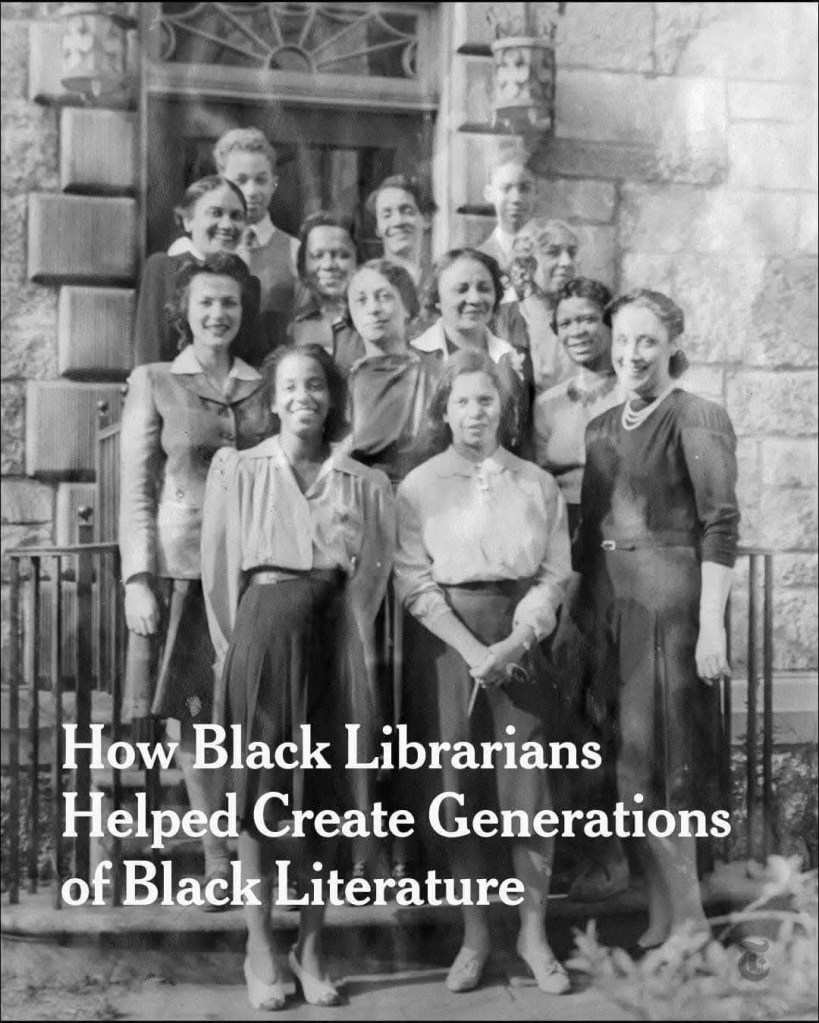
Black librarians have played a vital role in preserving generations of Black literature and bringing new resources and opportunities to libraries for decades.

Before emancipation, Black people in the South were punished for reading or teaching others to read. However, during the Harlem Renaissance, a movement emerged to provide access to reading material on Black history.Women were the institution builders.’

Many Black women who were the first to attend library school created their own methods after learning ones that weren’t suited to Black books and ideas.

“In many ways, it is these women who were the institution builders,” Joy Bivins, the director of the Schomburg Center for Research in Black Culture, told The New York Times.The outlet reported that while library services for Black citizens were unavailable in the South and limited in the North, branches that did serve them often had few books geared to their interests and sometimes lacked card catalogs or reference collections.

This began to change in 1924 when Vivian Harsh became the first Black librarian to lead a public library branch in Chicago. In 1932, she led the city’s first branch in Bronzeville, a Black neighborhood, welcomed Black history study groups and established the nation’s second public library collection dedicated to Black life and literature, according to the Times.However, according to the outlet, Harlem captured the transformations of the era more when, starting in 1920, a white librarian named Ernestine Rose hired four young Black librarians at the 135th Street library.

Improving faulty Dewey decimal categories

For Black librarians, cataloging often meant “countercataloguing,” per the Times.

As Black collections moved from private homes to institutions, quirky personal systems no longer sufficed, and the systems used in most libraries proved inadequate as they allowed limited space for non-European subjects.

Dorothy Porter, a librarian at Howard University, and others adjusted the Library of Congress’ standard subject headings, adding ones for topics such as passing, Pan-Africanism and the blues. She also addressed the racism embedded in the Dewey decimal classification system.This system, created in the 1870s, categorized knowledge in ways that marginalized Black experiences, confining them to narrow numerical slots.

Despite warnings that she might face copyright infringement for her modified system, an unauthorized version was adopted at the Schomburg Center and other places.

Today, as the field of library and information science has seen calls to ban more books, change the way the field selects material for public library use, and, in many ways, minimize the importance of librarians in their communities, it is more important than ever to remember those who challenged oppression, racism, and erasure. The percentage of Black librarians in the United States remains in the single digits. However, we will continue to push for representation, access to information, and lifelong learning as a right for all. The African American librarians who fought to preserve that right are among the many reasons we acknowledge and celebrate Women’s History Month. ~OC
Sunday Bloody Sunday

Today’s a new day! On March 7, 1965, in Selma, Alabama, approximately 600 peace loving advocates set out to march to Alabama’s capital, Montgomery, to demand voting rights for Black Americans in the face of unfair, discriminatory laws and practices.

Sixty years ago, black voters faced numerous obstacles when trying to register to vote, including literacy tests, poll taxes, intimidation and brutal violence. Civil rights leaders organized this march to demand an equal opportunity to participate in American democracy.  

As the marchers peacefully crossed Selma’s Edmund Pettus Bridge, local police, vigilante groups and state troopers violently attacked them.

Many marchers were hospitalized as a result of these brutal attacks, which was televised nationwide and became known as “Bloody Sunday.” In addition, the events leading up to this day and the weeks after resulted in the deaths of three civil rights advocates.

The brutality of Bloody Sunday highlighted the urgent need for change and galvanized support for the Civil Rights Movement across the country. Two weeks later, Dr. Martin Luther King, Jr. and 3,200 civil rights protesters completed the 54-mile march from Selma to Montgomery.

Thanks to the efforts of those brave freedom fighters, historically disenfranchised Americans were able to fully participate in the democratic process for the first time.

Sadly sixty years later, there is still a lot of work to do across America to protect and expand the freedom to vote. The fight is not over. We, the Freedom Fighters of today must continue to speak up and fight for justice.

So on this 60th anniversary of Bloody Sunday, let’s remember the legacy of all those who fought for a truly inclusive democracy and pledge ourselves to supporting the continuing fight for the freedom to vote and for equal rights for all Americans. ~OC

The Power of Groups

Today’s a new day! I believe committed individuals and a small group of passionate people can help change the world.

Let me remind you that Jesus chose a small group of disciples to share an example of what happens when a group of committed individuals come together for a greater purpose. If we follow just that example, we can see how a small group of people can change their communities and beyond. Just think, we are still talking about twelve individuals who came together and committed themselves to the cause of Christ, thousands of years later. Small groups are still the primary focus of most churches, especially ones that want to accomplish purposeful ministry.

I can look no further than my godson Ricky Aiken, who saw a need in his community and started Inner City Innovators (https://innercityinnovators.org/), which is not just making a difference in Ricky’s community, but communities across America. One person with a dream and some committed people to help him develop and create a life changing organization.

As we celebrate Black History Month, I think about some unknown heroes who were committed to the Civil Rights Movement. They are the individuals and families that opened up their homes to the leaders in the Movement because they were not allowed to stay in most hotels or restaurants in the South. These individuals and families offered food, rest, conversation and shelter to the heroes we read about in history. A group of unassuming individuals and families opening their homes and encouraging the Civil Rights leaders, as they led peaceful marches and protest across the south. Without these kind and loving souls, the bodies and minds of the great leaders of the Civil Rights Movement might not have carried on.

Small groups of humans, just like your friends or colleagues that gather for common themed conversations, have been changing the world since the days of the caveman. It is no surprise, at least now reflecting on each phase of my own life that every step I have taken to make an impact for the greater good has been in the company of a small group of people with similar questions, passions, ideas and the determination to take action.

What is your mission and purpose in life and who will sit around the table with you to help encourage and support your dream to make a difference? ~OC

“For where two or three gather together as my followers, I am there among them.”” ~Matthew 18:20

“Never doubt that a small group of thoughtful, committed citizens can change the world; indeed, it’s the only thing that ever has.” ~ Margaret Mead

“While others hit the streets, marching, singing protest songs and risking arrest, these women made their contributions to the Civil Rights Movement in their kitchens.” – Rosalind Bently, Hostesses of the Movement

My Tribute to President Carter

Today’s a new day! The world has lost a giant in President Jimmy Carter, the man whose impact endured far beyond his presidency. To call him a statesman is accurate but insufficient; he was a humanitarian, a leader of conscience, and a model of humility. I had the profound honor of sitting in on President Carter teaching Sunday School Class back in 2019. One of the highlights of my life. From that visit, I developed a beautiful and life changing relationship with the people of Plains, Georgia. The hometown of President and Mrs. Carter.

President Carter’s long and inspiring life reminds us that our lives are about impact, not image. It’s about making choices that prioritize others over self. From the peanut farms of Plains, Georgia to the corridors of the White House and places around the world, his journey was always one of service.

As we remember President Jimmy Carter, let us carry forward his legacy of humility and purpose. His life was a testament to the idea that, as human beings we are stewards of something greater than ourselves.

President Carter once said,

My faith demands that I do whatever I can, wherever I am, whenever I can, for as long as I can, with whatever I have, to try to make a difference.”

Thank you, President James Earl Carter Jr, for showing us what leadership, humanity, and faith in action truly means. Your amazing legacy will continue to inspire the world. Rest in peace Mr. President. ~OC

The Power of One

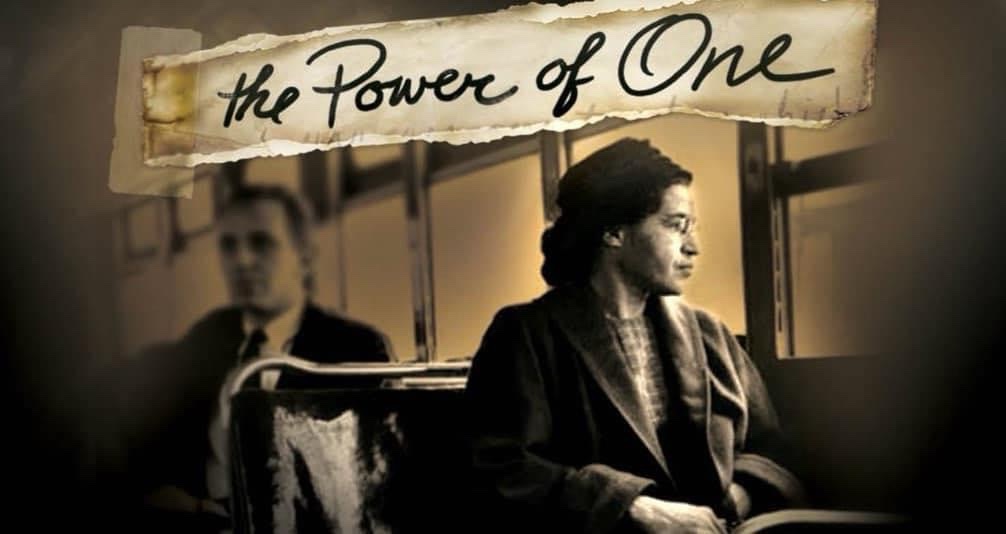
Today’s a new day! More importantly, it’s Rosa Parks Day. On December 1, 1955, Rosa Parks changed the course of history with one act. Ms. Parks refused to give up her seat on the city bus to a white passenger, as the unjust law demanded her to do during that time of American History. She was removed from the bus and arrested. Yet her spontaneous defiance sparked the ensuing Montgomery Bus Boycott, a movement of blacks and whites that took shape within hours of her arrest and advanced the civil rights movement across the United States. The boycott lasted 381 days. A time in which black commuters walked, rode bikes, or accepted rides from sympathetic supporters — until a district court ruling declared bus segregation unconstitutional. This ruling was upheld by the U.S. Supreme Court, striking down the practice across the country. And this was just the beginning: the boycott galvanized a national network of support, and created a framework of committed activists, that would form the backbone of the civil rights movement for decades to come. ~OC

“People always say that I didn’t give up my seat because I was tired, but that isn’t true. I was not tired physically… No, the only tired I was, was tired of giving in.” ~Rosa Parks

Transformed Nonconformist

Today’s a new day! Did you know there are 1,430 hate groups in the United States alone. Sadly, those numbers are growing. While many tend to be small, they have political power and want to see unrest across America.

Hate groups will continue to poison hearts, stir up violence, and polarize people in 2024 and beyond. So to gear up for these challenges, I reflected back on Dr. Martin Luther King Jr.’s book Strength to Love. I encourage you to check it out.

The book is a fascinating read, but one of the phrases Dr. King used truly grabbed my attention. Dr. King calls us to be “Transformed Nonconformist” Here is the scripture that Dr. King used to come up with this beautiful term.

“Do not be conformed to this world, but be transformed by the renewing of your mind” (Romans 12:2).

Transformed nonconformists reject racism, discrimination, hatred and anything that tears our society apart and tries to divide us.

Transformed nonconformists break the chain reaction of evil by refusing to “fight fire with fire.”

Why? Because as Dr. King explains, “Hate multiplies hate, violence multiplies violence… in a descending spiral of destruction” This is one of the main reasons for not responding in kind to evil. In the powerful words of Mahatma Ghandi, “An eye for an eye only ends up making the whole world blind.”

The second part of Romans 12 describes the divine reason we break the chain reaction of evil. The Scriptures command us to conquer hate through the power of love:

*Bless those who persecute you; bless and do not curse (v. 14).

*Do not repay anyone evil for evil. Be careful to do what is right in the eyes of everyone (v. 17).

*If it is possible, as far as it depends on you, live at peace with everyone (v. 18).

*Do not take revenge, my dear friends, but leave room for God’s wrath (v. 19).

*If your enemy is hungry, feed him; if he is thirsty, give him something to drink… (v. 20).

*Do not be overcome by evil, but overcome evil with good (v. 21).

These commands indicate that a transformed nonconformist is in fact a peacemaker. And these peacemakers break the chain reaction of evil – through suffering, absorbing pain and responding in love.  

Peacemaking is not for the faint of heart. Peacemaking demands an uncompromising rejection of the unloving ways of the world and a radical embrace of the enemy-loving way of Jesus.

I read an article once where a civil rights worker was asked how he was able to endure racial hatred and violence while working for justice. “The hatred coming at me in those fists and clubs was bouncing right off me back into the air, and it could just continue to spread like electricity. I decided not to fight back. I would let my body absorb that hatred, so that some of it would die in my body and not bounce back into the world. I now see that my job in the midst of evil is to make my body a grave for hate.”

Did you catch that last sentence? “Making my body a grave for hate.” That sounds scary. It is! That is why I chose to follow Jesus – the one who made his body a grave for hate, the one who rose from the grave, and the one who said, “Peace be with you. As the Father has sent me, so I send you” (John 20:21).

I pray you will join me on this journey of Love over hate. ~OC

I Am Wrecked…Again

Once again I am wrecked by what I see happening in Atlanta, Virginia and Minneapolis. I keep believing that one day, I will wake up and not hear about another person of color being victimized by the actions of a person filled with hate or a person quick to judge. But sadly, that seems like a dream. But hey, I am a dreamer.

So I will continue praying for my brothers and sisters of color. Praying that as you walk down the street, people will not clutch their purses or bags a little tighter. Praying as you visit a place of business, you will not be hassled. I pray if for some reason you are pulled over by the police, you will be treated with respect. I am saddened that I have to pray this prayer every day for my brothers and sisters of color. But I will not stop praying. I will not stop speaking out against injustice. I will continue to stand with you. ~OC

My Prayer: Take Off The Blinders

As we witnessed the civil unrest at the Capital in Washington, D.C. on January 6, 2021, there was a lot of discussion about hate groups and racism in America. Some in the white community (Breaking News: I am white), screamed on social media that racism is no longer an issue in 2021. Really?

When I engage some white people in the topic of racism, they often will challenge me to prove that racism still exist today in America. So I present them with a challenge. My challenge to them is to simply listen.

I am a storyteller, so I will share stories that my friends of color have shared with me about being racially profiled. I will share legit studies that have been done on the subject of racism. I will share videos showing racism happening to a person of color. I will encourage them to read articles or books on the subject of racism. Most importantly, I will challenge them to reach out to a friend of color and asked them if they have ever experienced racism. I think to myself, one of these suggestions will get through to them. Right? Sadly, a good majority of the time I will hear the following excuses:

*The data is biased.

*I don’t have time to read any articles or books.

*The person in the video was overreacting.

*My friends of color (if they actually have some) don’t want to talk about racism.

*I am tired of hearing about racism. Can’t everyone just get over it?”

I have had these types of conversations with my white friends and complete strangers too many times to count. But then after years of being frustrated by people who do not believe racism is still sadly alive and well, a beautiful freeing thought came to me. I don’t have to proof racism still exist today. The burden of proof is not on me. The burden of proof is on those who refuse to believe racism is still a major issue in 2021. There is no reason for me to walk away from these conversations feeling frustrated. The debate is over. This truth has set me free.

To those who continue to believe racism no longer exist, prove it. Show me some actual evidence. Show me some factual data. Just as my evidence proofs racism still exist in 2021, your evidence better support your argument against that fact.

As I close, my prayer is that God will change the hearts and minds of those who still deny racism is a clear and present danger in America. I pray these deniers will take time to read a book or article on the subject of racism. I pray they will check out the many videos that sadly show racism is still wide awake in our nation. My prayer is that my white brothers and sisters who still believe racism is a thing of the past, will reach out to a person of color and have a real conversation about this stain on America. I pray the blinders will come off. ~OC

Thank You, Dr. King

On this day, we celebrate the life of Dr. Martin Luther King, Jr. Long after his death, Dr. King’s words and actions continue to inspire us. They continue to challenge us.

Today we take time to remember this amazing man of peace. Dr. King truly lived out the words he wrote and spoke. His words live on, some of the most meaningful ever spoken.

During this time of unrest in our world, I encourage you to stop and reflect on Dr. King’s words. To put those words in action. To come together and live out The Dream. Thank you Dr. King. ~OC

Blog at WordPress.com.

Up ↑